As the landscape of modern weddings continues to evolve, the focus has shifted toward creating ceremonies that blend timeless traditions and reflect the world we live in today. As officiants, our role is to help you take these beautiful traditions and give them a place in your ceremony that feels natural and intentional.
Share the Meaning with Your Guests
We prioritize explaining the meaning behind these traditions during the ceremony. This added touch ensures that every guest, regardless of their background, will feel welcomed and understand the beautiful symbolism behind every tradition we include.
Jewish Traditions Through a Modern Lens
Many Jewish customs remain timeless because they speak to values we all share, home, family, and the beginning of a life together. These traditions do not require a religious setting to be deeply moving, they carry immense power when they are chosen because they hold personal meaning for you.
- The Chuppah: This is a traditional canopy symbolizing the home you will build together. It is designed to be open and welcoming to your friends and family. Traditionally, the sides are left open to symbolize the tent of Abraham, which welcomed travelers from all directions.
- The Ketubah: Historically a marriage contract, the modern Ketubah is often a beautiful piece of art that outlines your commitment to one another. In a civil ceremony, it serves as a meaningful “statement of intent” that you sign together, representing your shared promises.
- Blessing Over Wine: The couple drinks from the same cup, representing that they will share all future experiences together—the sweet and the bitter, the joys and the challenges.
- The Seven Blessings (Sheva Brachot): These celebrate themes of love, companionship, and the joy of community. In a civil or interfaith context, these are often adapted as seven heartfelt wishes for your future, read by different family members or friends. It is a wonderful way to involve your loved ones in the ceremony.
- The Exchange of Rings: symbolizing your commitment to one another.
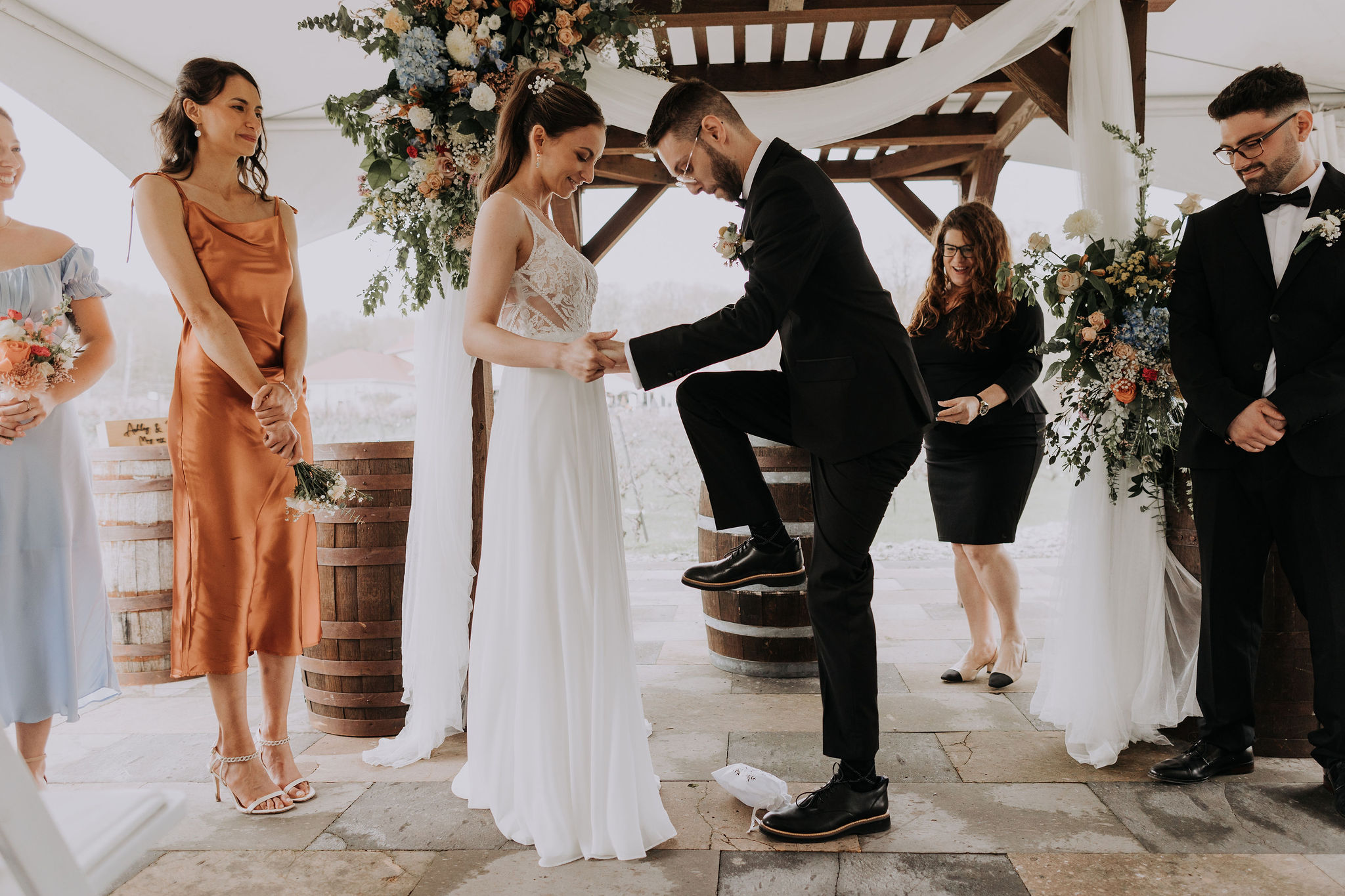
- Breaking the Glass: This is always a highlight of the ceremony. It serves as a way to recognize that life is a mix of both joy and challenges, and that you are ready to navigate all of it as a team.
- Mazel Tov: This is the traditional shout of joy at the very end of the ceremony. It translates to “good luck” or “congratulations,” signaling the official start of your celebration.
Do you kiss before or after breaking the glass?
This is a detail we often coordinate with our couples to ensure the moment feels seamless. Typically, the cloth-wrapped glass is placed before you toward the end of the ceremony. We then continue with the formal declaration of marriage, followed by the words, “Congratulations, you may kiss!” The glass is then stepped on, the kiss follows, everyone yells Mazel Tov!, and your celebrations begin!
Wishing you a Lifetime of Love and Happiness,
Emily Mayer
Wedding Officiant